On Luck, Agency, and Self-Manifestation

To have luck, you must constantly test your own luck with an open heart and honesty.
I assume this sounds absurd, but I think you’ll understand what I mean when I explain it better.
Destiny, chance, luck. These things exist, but how are they activated?
Well, think of an MMO. If something has a 1% chance of happening, say… a dungeon has a rare loot you want, say… the tears of a very tiny loli fairy; naturally, what you do, if you really want it, and you do, is repeatedly complete the same dungeon. This isn’t really increasing your luck, but it’s maximizing your chances.
If you really want something to happen that requires “luck,” just play that dungeon as many times as possible, repeatedly. This has become literally SO FUCKING EASY on the Internet. Never before in human existence has “trying your luck” been so easy, because trying your luck only requires connecting two consciousnesses.
The reason I’m thinking about this is because pessimism is what makes people “unlucky”—it’s not so much that they’re unlucky, but more that they’re taught to be so spoiled that they don’t even bother to replay the dungeon. I know this sounds very… mundane and maybe even obvious, but when people are at the end of their rope, they seem to forget this, and that’s when it really matters.
I see many people in bad situations, with internet connection and IQ above 110, thinking there’s no hope. That’s not true—cultivate social spaces where you can be yourself, make friends, be a good person, and you’ll never truly be in danger.
If you can’t do that, then you shouldn’t cry when one day you’re homeless with nowhere to go, because just as being poor is a choice in many ways, so is being lost and alone in the world. I chose to win.
Why is my life characterized by incredible physical and mental energy, a bright and sweet aura, deep emotion, and indomitable intellect? Whenever I think about it, I trace it back to an uncontrolled autocatalytic feedback loop formed between the same group of causes: rigorously curated mental and sensory diet, cultivated positive illusion, ecstatic and intense physical training combined with nutritious food, and the curious innocence of a child.
I wake from sleep and begin to dream… we’re dreaming all the time, but we dream the Dream of God.
Absolute Faith in Self
There is an almost unlimited ceiling on an individual’s potential for freedom and achievement when Absolute Agency is reached. The only reason to attribute anything less than unlimited potential to yourself is to avoid the pain of failing to achieve it. This belief in infinite potential is often called madness or faith, but many of the most effective beliefs are mad and far more constructive than those considered “realistic.”
Parsimony and risk aversion are often considered characteristics of a “shrewd” and “realistic” person, but I can explain why this is objectively false:
“Realism” denotes a belief or model of the world that is “congruent with reality”
“Congruence with reality” is most appropriately measured with reference to “success”
“Success” is obtaining the desired and expected outcome, i.e., the success of a predictive model
“Absolute faith in self” provides success far more reliably than parsimony and risk aversion
Therefore, madness is actually the most “realistic” model of reality.
Many people cannot accept this robust conclusion. They believe that truth and faith, being opposites, cannot refer to the same thing. This is linguistic confusion: a false fusion between WORD and REFERENT (the phenomena identified by a word)—in other words, a fusion between the descriptor and the described object. Those who are deceived by this become trapped in a linguistic cage regarding their definition of truth and confuse the moon with the finger pointing at it.
A monk points to the moon to direct the student’s attention to it. The student, guided by the pointing finger, now looks at the moon. But if instead he looks at the finger and considers it to be the moon, he will be deceived about the nature of both the moon and the finger.
In the parable above, confusion is created by a scarcity of adequate descriptors.
You need to understand this—if you don’t understand this, you won’t understand anything, ever.

All things are chosen and everything is your fault, including things that happen without your interference and things that are outside your control—It’s your fault that they’re outside your control. You chose your parents, chose your mind, and chose all aspects of your physiology, whether cultivated or genetic.
The opposite of externalizing blame is internalizing total responsibility. Maximum agency = maximum responsibility.
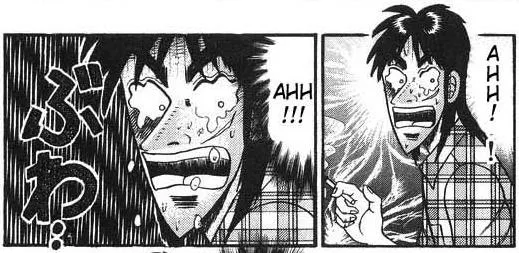
Risk aversion is an atheistic neurosis that underestimates the consequences of inaction. The shrewdly pragmatic man commits to deteriorating his soul minute by minute to avoid a clearer type of pain, but also a grander and more poetic type. In payment for this bargain, he feels pain constantly and meaninglessly. He’s so afraid of overwhelming failure that he accepts prolonged and mundane failure. But he excludes the possibility of overwhelming success. As a result, he fails at life, when all he could have risked was incredible pain and transcendent success.
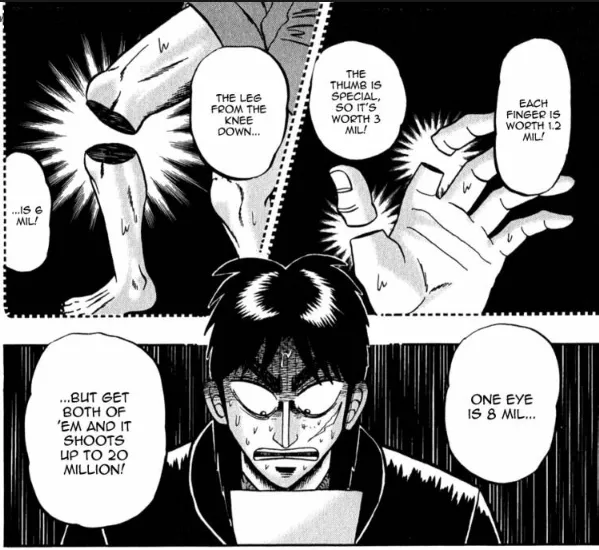
There’s no way to avoid risk, just as there’s no way to avoid suffering; only its redistribution into a toxic delusion of slow burning or its transfiguration into sanctity and sublimity.
A child’s innocence is the most beautiful thing.
The more obstinately I pursue my curiosity, the more wonders I discover in the Kingdom of God—it’s truly a shame to see a person in whom curiosity has weakened and died. Cultivating and satisfying curiosity is not only a path to broad and properly integrated knowledge, but also a heuristic for determining Right Action and a beacon of self-manifestation in the purest sense.
Curiosity arises when a person perceives the world and finds a particular combination of raw facts fascinating enough to stimulate deeper investigation—the person is called by the Self to act on their curiosity, drawn by the prospect of exploring new territory both of the world and of the Self. Therefore, self-manifestation is not “manifesting yourself” in the colloquial sense, but “causing the Self to manifest,” and in its most advanced form is about being able to “manifest Selves,” but that’s a subject for another text.
By the way, I use this term “self-manifestation” hesitantly because it has been colonized and deprived of the meaning attributed to it by C.G. Jung. It’s worth explaining the true meaning of the term:
Jung conceived of the Self as the totality of an individual across time and space, not just the soul represented by a particular moment in their life. The Self is the transcendent object that all these freeze-frames have in common—the provenance and continuity of the soul. The child and the man have almost nothing in common except the Self, of which each embodies a different facet. The child and the man progressively obscure and reveal the Self over time, like a lantern in a dark field.
Throughout a person’s life, at any given moment, the Self must interact both with the individual who embodies it and with the world that individual encounters.
The hyperactive and workaholic nature of the shrewd student is the object of complaint from all the women in his life. Interestingly, this is also what attracts them to him, but that too is an investigation for another day.
The vivacity and momentum that seethe within a man are not only his greatest tool for sculpting and reorganizing the world; they are his definition—his will supersedes his body and soul, and is most appropriately conceived as the final locus of his being. He EXISTS to the same extent that his WILL exists. The shrewd student desires immensely and exists immensely to the same degree.
The more he works, the luckier he gets. He doesn’t conserve energy or withhold effort for fear of spending it in the wrong place—on the contrary, he discovers that his production capacity dilates in direct proportion to the demand placed upon him.
If a person adopts a regular practice of productive activity habits (outside their job), spends time alone, seeks the satisfaction of curiosity, particular dilettante erudition, and skill acquisition for its own sake, they naturally become interesting, enigmatic, idiosyncratic, and original.
With this, the person acquires power of action and, with it, an aura that makes them attractive to others… reality-distorting conversational powers. A smiling gaze with a soul behind it is like a government ID, a license to kill; the person is immediately forgiven for incredible damage to strangers based on the presumed authority of innocent intent. They have the Mandate of Heaven that the Chinese are so proud of.
The shrewd student who acquires absolute agency shines with benevolence and drama—He converses with a stranger about his niche special interest and discovers he knows as much about the subject through passive knowledge absorption as the stranger knows through their own curious investigations… He has a soliloquy in his pocket for any subject.
People frequently tell me I’m the luckiest person they’ve ever met and that interesting things happen to me with unbelievable frequency. They observe that I’m approached by strangers with astonishing frequency and offered opportunities with surprising regularity. They ask me how it’s possible that I have time for everything I do or do everything I want. The answer is that I make good friends and am genuine in everything I do.
Exercising your capacities in this way is what it truly means to affirm the world and affirm your own life… One must have passion for all things and recognize the Kingdom of God as eternally, excruciatingly, extensively fascinating… The brain becomes large and powerful, and all decisions become exponentially easier.
But if you’re really poor, lost, and have nothing left to lose, then why not simply try to chart your path to a better life?
I know it sounds stupid if you’re in a bad situation, but the best thing one can do in a bad situation is to try to develop pure and mutually beneficial social bonds. Maybe I sound like a reptilian when I say this, so let me rephrase: create your own luck.
Similar Posts ↑
- Art (1 shared tags)
- Database Animals (1 shared tags)
- Ed Pocket Goes Back to Work (1 shared tags)
- Avant Otaku (2 shared tags)
- Nem-Nem Rave 01 (1 shared tags)
- An Otaku Theology (1 shared tags)
- Anime or Something Like It (2 shared tags)
- Similar Songs (1 shared tags)